
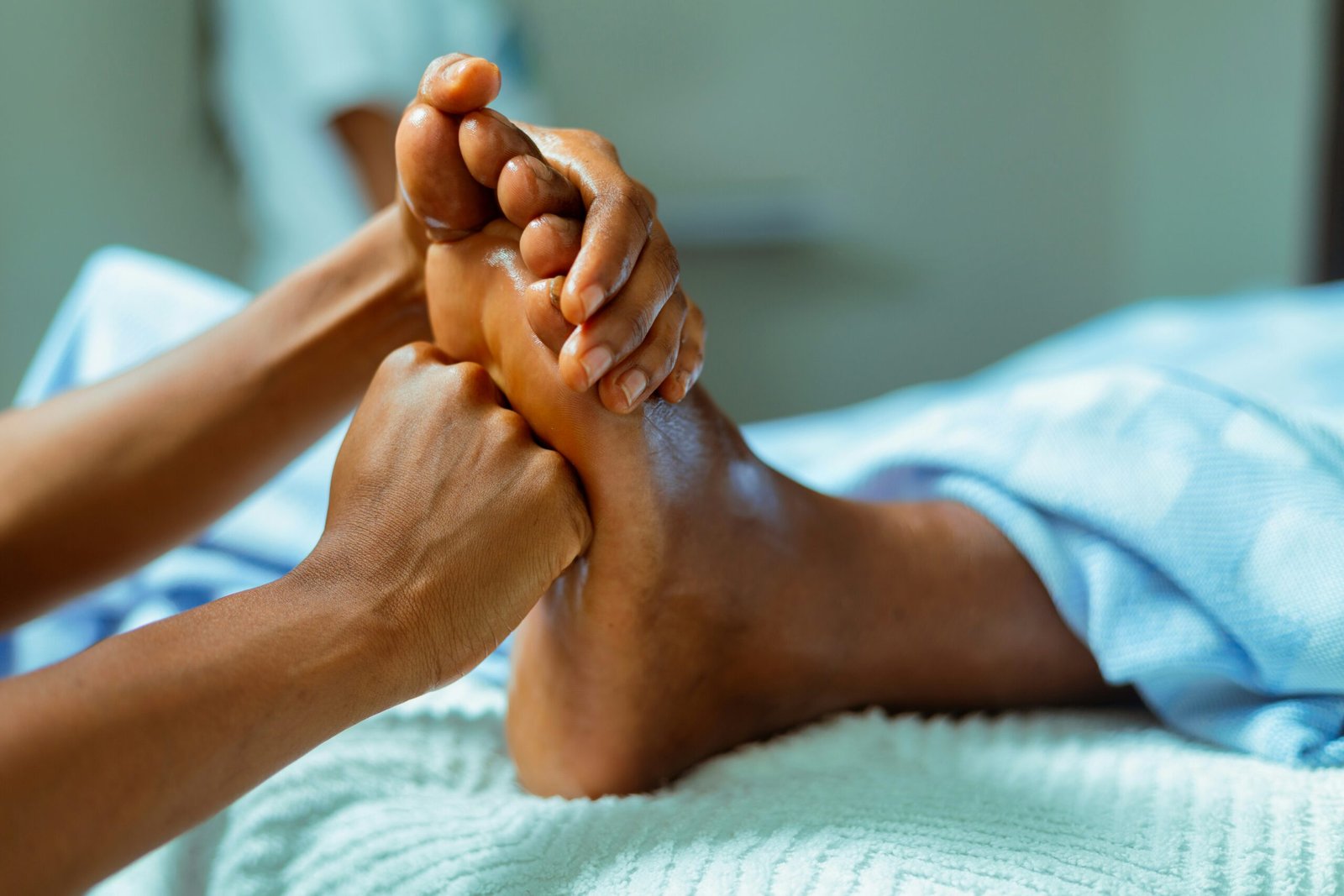
Ayurvedic foot massage, an ancient Indian practice, has been a cornerstone of holistic health for centuries. This traditional therapy, known as Pada Abhyanga, involves gently massaging the feet with warm, medicated oils to stimulate the body’s natural healing processes.
By focusing on the feet, Pada Abhyanga aims to balance the body’s energies, promoting physical, mental, and spiritual well-being. This practice is rooted in the principle that the feet are a microcosm of the body, with various pressure points corresponding to different organs and systems.
The significance of Ayurvedic foot massage lies in its ability to reduce stress, improve circulation, and induce deep relaxation, making it an effective therapy for individuals seeking holistic health solutions.
Key Takeaways
- Ayurvedic foot massage is an ancient practice originating from India.
- Pada Abhyanga involves massaging the feet with medicated oils.
- This therapy aims to promote overall well-being by balancing the body’s energies.
- It can help reduce stress, improve circulation, and induce relaxation.
- Ayurvedic foot massage is a holistic approach to health.
The Ancient Practice of Pada Abhyanga
Pada Abhyanga, an ancient Ayurvedic practice, has been a cornerstone of holistic healing for centuries. This traditional massage technique focuses on the feet, which are considered a microcosm of the body, reflecting the overall health of an individual.
The practice of Pada Abhyanga is deeply rooted in Ayurvedic tradition, where the feet are massaged with warm oil to nourish and rejuvenate the body. This ancient ritual is not just a physical treatment but a holistic approach to balancing the body’s energy and promoting overall well-being.
Historical Origins in Ayurvedic Tradition
Pada Abhyanga has its origins in ancient Ayurvedic texts, where it is described as a therapeutic practice to maintain health and prevent disease. The technique involves massaging the feet with specific oils and herbs tailored to an individual’s constitution, or dosha. This personalized approach ensures that the treatment is effective in balancing the individual’s physical, mental, and emotional health.
The historical significance of Pada Abhyanga is evident in its continued practice over centuries. It has been passed down through generations, with each practitioner adding their knowledge and experience to the technique. The practice is not limited to therapeutic benefits; it is also a ritual that promotes relaxation and spiritual well-being.
Evolution and Modern Relevance
Over time, Pada Abhyanga has evolved to incorporate modern understanding and techniques, making it more accessible and effective. Today, this ancient practice is recognized globally for its numerous benefits, including stress relief, improved circulation, and enhanced overall health. The modern relevance of Pada Abhyanga lies in its ability to complement contemporary healthcare practices, offering a natural and holistic approach to wellness.
The integration of Pada Abhyanga into modern wellness routines is a testament to its enduring value. As people seek more natural and preventive healthcare options, ancient practices like Pada Abhyanga are gaining popularity. This resurgence is not just about reviving an old technique but about embracing a comprehensive approach to health that considers the individual as a whole.
The Therapeutic Benefits of Ayurvedic Foot Massage (Pada Abhyanga)
Pada Abhyanga is more than just a massage technique; it’s a holistic approach to healing that nurtures both body and mind. This ancient practice has been a cornerstone of Ayurvedic tradition, offering a multitude of benefits that enhance overall well-being.
Physical Health Benefits
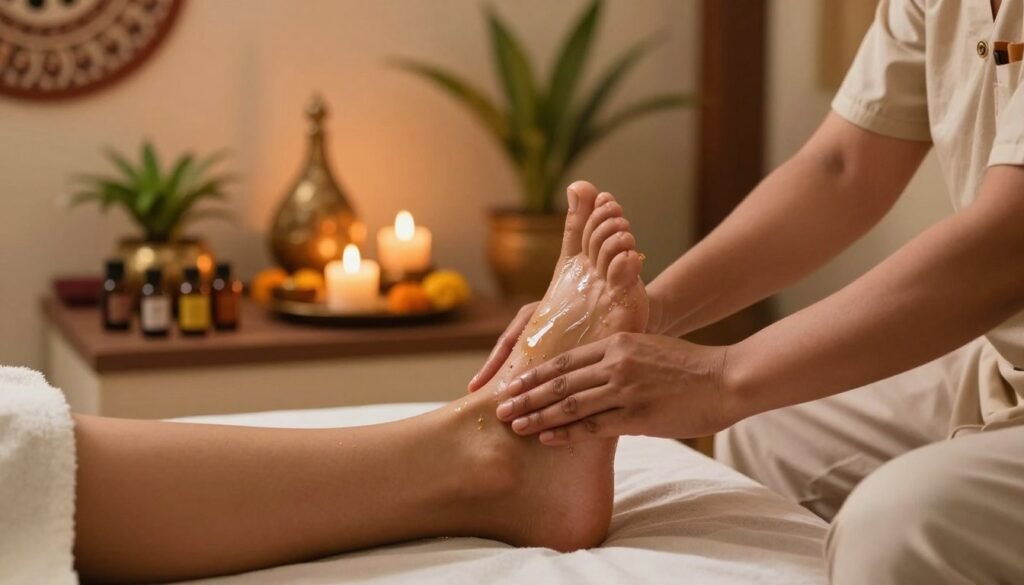
Ayurvedic foot massage is renowned for its ability to improve circulation, relieve pain, and promote relaxation. Some of the key physical health benefits include:
- Improved Circulation: Enhanced blood flow helps in the nourishment and detoxification of tissues.
- Pain Relief: Massage techniques can alleviate pain by releasing tension in the muscles and improving joint mobility.
- Enhanced Flexibility: Regular massage can lead to increased flexibility by reducing muscle stiffness.
As noted by Ayurvedic practitioners, “Regular practice of Pada Abhyanga can lead to significant improvements in physical health, making it an invaluable addition to one’s wellness routine.”
Mental and Emotional Wellness Benefits
Beyond its physical benefits, Ayurvedic foot massage is also a powerful tool for promoting mental and emotional well-being. It helps in reducing stress and anxiety, promoting a sense of calm and relaxation.
“The gentle strokes and soothing oils used in Pada Abhyanga have a profound effect on the nervous system, calming the mind and promoting emotional balance.”
- Stress Reduction: The massage technique is designed to calm the nervous system, reducing stress and anxiety.
- Improved Sleep: By promoting relaxation, Pada Abhyanga can help improve sleep quality.
- Emotional Balance: The practice is believed to help balance the doshas, leading to emotional stability.
By incorporating Pada Abhyanga into your self-care routine, you can experience these benefits firsthand, leading to a more balanced and healthy lifestyle.
Understanding Foot Anatomy in Ayurveda
In Ayurveda, the feet are considered a microcosm of the entire body, with various marma points that correspond to different organs and systems. This ancient practice views the feet as a vital area that reflects and influences overall health and well-being.
Marma Points in the Feet
The feet contain numerous marma points, which are sensitive areas that correspond to various parts of the body. Stimulating these points through massage can help restore balance and promote healing. There are 107 marma points in the body, with a significant number located in the feet.
Massaging these marma points can help alleviate various health issues, from circulatory problems to stress and anxiety. By targeting specific marma points, individuals can experience relief from discomfort and improved overall well-being.
The Three Doshas and Foot Characteristics
In Ayurveda, the three doshas – Vata, Pitta, and Kapha – play a crucial role in determining an individual’s characteristics, including those of their feet. Understanding one’s doshic balance can provide insights into foot health and guide the practice of Pada Abhyanga.
- Vata: Individuals with a predominantly Vata constitution often have dry, rough skin on their feet. They may experience issues like dryness and cracking.
- Pitta: Pitta types tend to have warm feet and may be prone to conditions like fungal infections or inflammation.
- Kapha: Kapha individuals often have moist, soft feet but may be susceptible to issues like coldness or dampness.
Recognizing these characteristics can help tailor the Ayurvedic foot massage to an individual’s specific needs, enhancing its benefits for holistic foot care and overall health.
Essential Oils and Herbs for Pada Abhyanga
In the tradition of Pada Abhyanga, the selection of appropriate essential oils and herbs is vital for achieving the desired therapeutic effects. The practice involves using specific oils and herbs tailored to an individual’s doshic constitution, thereby enhancing the massage’s overall benefits.

Vata-Pacifying Oils and Herbs
For individuals with a predominantly Vata dosha, it’s essential to use oils and herbs that have a calming and grounding effect. Warm sesame oil is often recommended due to its nourishing properties. Herbs like ashwagandha and jatamansi are known for their ability to soothe the nervous system and promote relaxation.
“The use of warm sesame oil in Pada Abhyanga can significantly reduce Vata imbalances by nourishing the skin and calming the nervous system.”
Pitta-Balancing Oils and Herbs
Pitta types benefit from cooling oils and herbs that help to calm the body’s internal heat. Coconut oil and brahmi oil are commonly used for their cooling properties. Herbs such as shatavari and licorice root are known for their soothing effects on the body and mind.
- Coconut oil for its cooling effect
- Brahmi oil to enhance mental clarity
- Shatavari to nourish and calm the body
Kapha-Reducing Oils and Herbs
For Kapha types, warming oils and herbs are preferred to stimulate circulation and reduce stagnation. Mustard oil is often used due to its warming properties. Herbs like ginger and turmeric are known for their ability to invigorate the body and improve circulation.
By carefully selecting essential oils and herbs based on an individual’s doshic constitution, the practice of Pada Abhyanga can be tailored to provide maximum therapeutic benefits, promoting overall well-being and relaxation.
Preparing for Your Ayurvedic Foot Massage
To fully benefit from an Ayurvedic foot massage, proper preparation is key. This involves creating a conducive environment and gathering the necessary tools and materials.
Creating a Therapeutic Environment
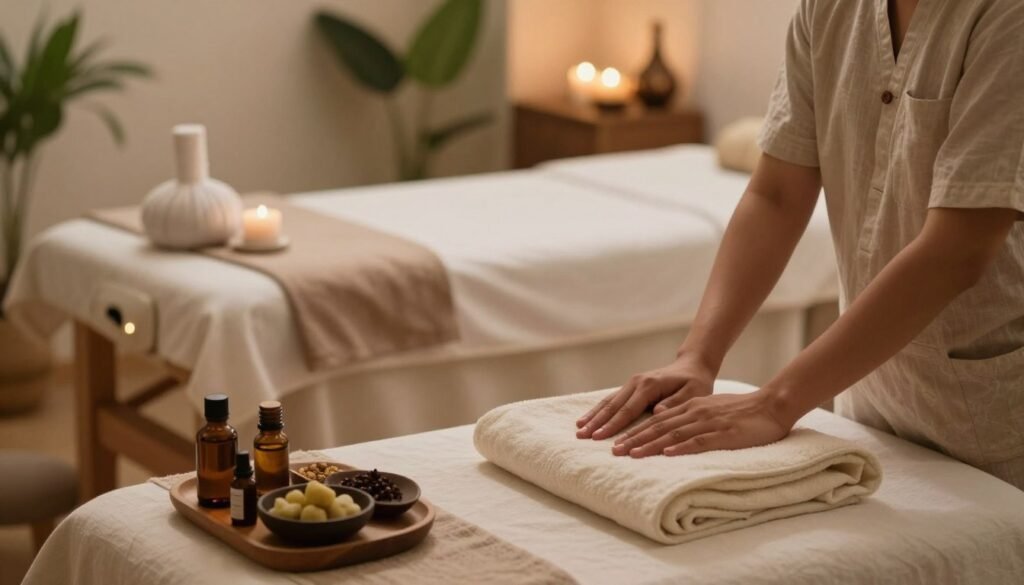
Creating a therapeutic environment is crucial for a relaxing and effective Ayurvedic foot massage. This can be achieved by ensuring the room is quiet and at a comfortable temperature, using soft, calming lighting, and playing soothing music in the background.
Tips for a Calming Ambiance:
- Use aromatherapy with calming scents like lavender to promote relaxation.
- Keep the massage area clean and clutter-free to minimize distractions.
- Use a comfortable massage table or chair to support the body during the massage.
Tools, Materials, and Oil Preparation
The right tools and materials are essential for an effective Ayurvedic foot massage. This includes selecting the appropriate oil based on your dosha, having a warm towel for warming the feet, and using a foot massage oil warmer for optimal relaxation.
- Choose an oil that balances your dosha, such as sesame oil for Vata, coconut oil for Pitta, or mustard oil for Kapha.
- Warm the oil before application to enhance its therapeutic properties.
- Gently warm the feet with a towel to increase blood circulation.
By following these steps, you can create a holistic and rejuvenating Ayurvedic foot massage experience that promotes overall wellness and relaxation.
Step-by-Step Pada Abhyanga Technique
Mastering the art of Pada Abhyanga requires a step-by-step approach that harmonizes the body and mind. This ancient Ayurvedic practice is not just about massaging the feet; it’s a comprehensive technique that involves specific steps to achieve optimal relaxation and healing.
Warming and Applying the Oil
The first step in performing Pada Abhyanga is warming the oil. Choose a high-quality oil that suits your dosha or skin type. Gently warm the oil by placing the bottle in a bowl of hot water or by using a oil warmer. Once warmed, apply a generous amount to your feet, ensuring complete coverage.
Gently massage the oil into the skin, making sure it’s fully absorbed. This initial application helps to soften the skin and prepare it for the massage strokes that follow.
Basic Massage Strokes and Sequences
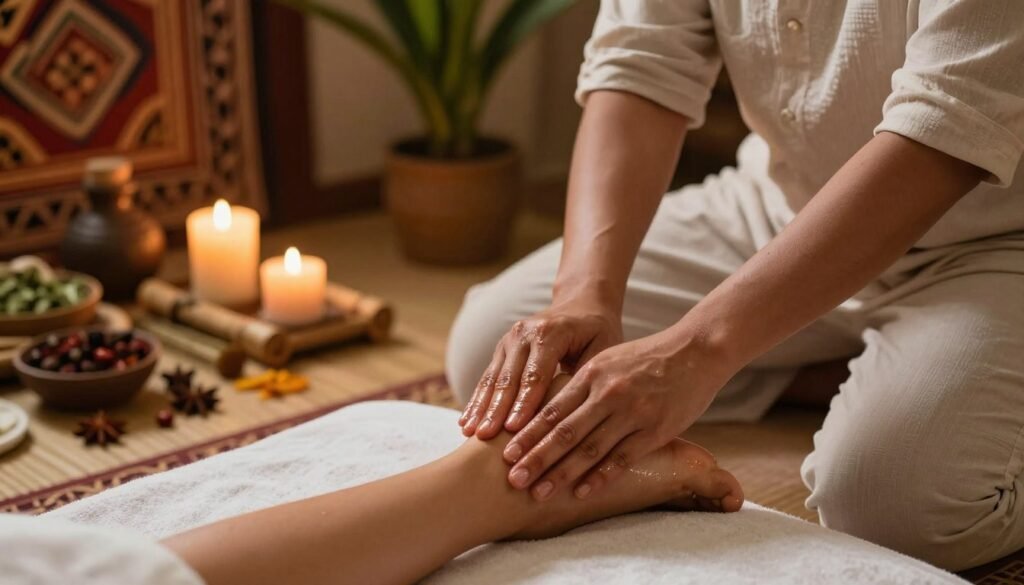
Begin the massage by using long strokes to cover the entire foot, from the toes to the ankle. Use gentle, flowing motions that are soothing and relaxing. Gradually increase the pressure as needed, but always be mindful of comfort levels.
- Start with the toes, gently squeezing and releasing each one.
- Move to the sole of the foot, using circular motions to massage the area.
- Work your way up to the ankle, using long strokes to cover the tendons and muscles.
Working with Marma Points
Marma points are vital energy centers in the body, and the feet contain several key points. Focus on the center of the foot, where the energy channels converge. Gently press and release these points to stimulate energy flow and promote healing.
By working with these marma points, you can enhance the benefits of Pada Abhyanga, promoting balance and well-being throughout the body.
Self-Massage vs. Professional Pada Abhyanga
Ayurvedic self-care practices, such as Pada Abhyanga, can be adapted for self-massage or enhanced through professional treatment, each with its own benefits. While self-massage offers convenience and personalization, professional treatment provides a more nuanced and effective experience. This section will explore the advantages of both approaches.
Practicing Effective Self-Massage
Self-massage is a convenient way to incorporate Pada Abhyanga into your daily routine, promoting relaxation techniques for feet and overall wellness. To practice effective self-massage, start by warming the oil and applying it to your feet, then use gentle strokes to massage the soles and toes. Regular self-massage can help improve circulation and reduce stress.
For an enhanced self-massage experience, focus on the marma points on your feet, which are believed to correspond to different parts of the body. Using your thumbs, apply gentle pressure to these points to stimulate energy flow and promote balance. You can also incorporate essential oils into your self-massage routine for added benefits.
What to Expect from Professional Treatment
A professional Pada Abhyanga treatment offers a more immersive and therapeutic experience, tailored to your specific needs and foot massage for wellness goals. During a professional treatment, the practitioner will typically begin by assessing your dosha and identifying areas of imbalance, then use a customized blend of oils and techniques to promote relaxation and rejuvenation.
Professional treatment can be particularly beneficial for those with specific health concerns or imbalances, as the practitioner can adapt the massage to address these issues. Additionally, the skilled touch and attention of a professional can help to reduce stress and promote deep relaxation, enhancing overall ayurvedic self-care practices.
- A professional treatment can be tailored to your specific needs and health goals.
- Skilled practitioners can address specific imbalances and promote deep relaxation.
- Professional Pada Abhyanga can be a valuable addition to your wellness routine.
Customizing Foot Massage for Health Conditions
Customizing Pada Abhyanga for specific health issues can significantly enhance its therapeutic benefits. By adapting the technique to address particular health concerns, individuals can experience more effective relief and improved overall well-being.
For Circulation and Neuropathy Issues
For individuals suffering from circulation problems or neuropathy, Pada Abhyanga can be tailored to stimulate blood flow and soothe nerve endings. Using warm oils infused with cayenne pepper or ginger can help dilate blood vessels and improve circulation.
A specific technique involves massaging the soles of the feet with gentle, circular motions, focusing on the areas corresponding to the toes and the heel. This can help stimulate nerve endings and improve sensitivity.
| Technique | Benefit |
|---|---|
| Gentle circular motions on the soles | Stimulates nerve endings, improves sensitivity |
| Using warm oils with cayenne or ginger | Improves circulation, dilates blood vessels |
For Insomnia and Anxiety
Pada Abhyanga can be adapted to promote relaxation and reduce anxiety by using calming essential oils such as lavender or chamomile. Massaging the feet with long, gentle strokes can help calm the nervous system.
Focusing on the marma points on the feet, particularly those associated with the head and neck, can help relieve tension and promote a restful sleep.
For Digestive and Hormonal Balance
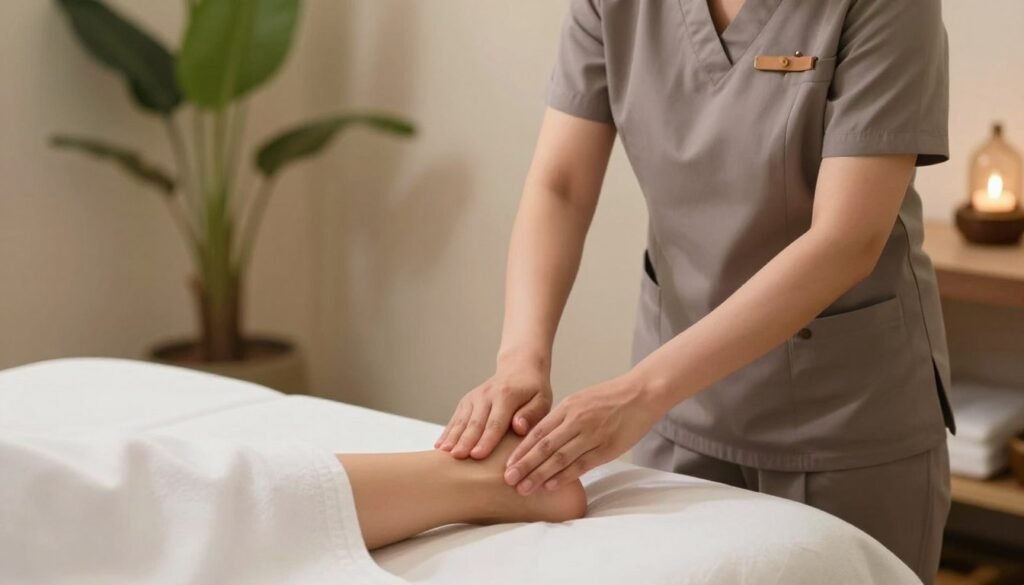
To address digestive issues or hormonal imbalances, Pada Abhyanga can be customized by applying gentle pressure to specific reflexology points on the feet. Using oils infused with peppermint or rosemary can help stimulate digestion and improve hormonal balance.
Massaging the areas corresponding to the abdominal region and the lower back can help relieve digestive discomfort and promote hormonal equilibrium.
| Reflexology Point | Benefit |
|---|---|
| Areas corresponding to the abdomen | Relieves digestive discomfort |
| Areas corresponding to the lower back | Promotes hormonal equilibrium |
Integrating Pada Abhyanga into Daily Wellness Routines
By integrating Pada Abhyanga into your daily life, you can experience profound benefits for both body and mind. This ancient Ayurvedic practice is not just a massage technique; it’s a holistic approach to wellness that can be tailored to suit your individual needs and daily routines.
Morning vs. Evening Practice Benefits
Deciding whether to practice Pada Abhyanga in the morning or evening depends on your personal preferences and goals. A morning practice can be invigorating, helping to stimulate circulation and prepare you for the day ahead. It can also help in setting a positive tone for the day, promoting a sense of calm and clarity.
On the other hand, an evening practice can be incredibly relaxing, helping to unwind and calm the mind and body after a long day. It can aid in improving sleep quality by soothing the nervous system and relaxing the muscles.
Seasonal Adjustments
Adjusting your Pada Abhyanga practice according to the seasons can enhance its benefits. For instance, during the colder months, using warmer oils can help to nourish and protect the skin, while in the warmer months, lighter oils can be more beneficial for cooling and refreshing the feet.
- In winter, consider using oils like sesame or almond oil to provide extra nourishment and warmth.
- In summer, lighter oils such as coconut or sunflower oil can be more appropriate.
- During spring and autumn, you can adjust your oils based on your dosha and the specific needs of your feet.
Combining with Other Ayurvedic Practices
Pada Abhyanga can be effectively combined with other Ayurvedic practices to enhance its benefits. For example, incorporating it with yoga or meditation can amplify the relaxation and wellness benefits. Additionally, following up with a warm bath or shower can further help in detoxifying and relaxing the body.
Tips for Combining Practices:
- Start with a gentle yoga routine to loosen up the muscles.
- Follow with Pada Abhyanga to nourish and relax the feet.
- End with a meditation or deep breathing exercise to calm the mind.
By thoughtfully integrating Pada Abhyanga into your daily routine and adjusting it according to your needs and the seasons, you can maximize its therapeutic benefits and enhance your overall well-being.
Precautions and Contraindications
Pada Abhyanga, though generally safe, requires awareness of specific precautions and contraindications. While this ancient practice offers numerous benefits for holistic foot care and natural healing through foot massage, certain conditions may necessitate caution or modifications to the technique.
When to Avoid Foot Massage
There are specific situations where Pada Abhyanga should be avoided or approached with caution. These include:
- Active foot infections or open wounds
- Recent injuries or fractures in the feet or ankles
- Severe circulatory problems, such as deep vein thrombosis
- Diabetes with neuropathy (requires consultation with a healthcare provider)
It’s also advisable to consult with a healthcare professional before starting Pada Abhyanga if you have any underlying medical conditions or concerns.
Modifications for Sensitive Individuals
For individuals with sensitive skin or specific health conditions, modifications can be made to the Pada Abhyanga technique. These may include:
| Condition | Modification |
|---|---|
| Sensitive Skin | Use gentle, lukewarm oil; reduce massage pressure |
| Pregnancy | Avoid certain marma points; use gentle strokes |
| High Pitta | Use cooling oils like coconut or sandalwood |
As noted by Ayurvedic practitioners, “Modifying the technique according to individual needs is crucial for a safe and beneficial Pada Abhyanga experience.” This personalized approach ensures that the practice is both enjoyable and therapeutic.
By understanding and respecting these precautions and contraindications, individuals can enjoy the pada abhyanga benefits while minimizing potential risks. It’s about creating a balance between the therapeutic aspects of the practice and individual health considerations.
Conclusion: Embracing the Healing Power of Pada Abhyanga
Pada Abhyanga offers a powerful tool for promoting overall well-being and balance. By understanding the therapeutic benefits of ayurvedic foot massage, individuals can experience profound relaxation and rejuvenation. This ancient practice has been shown to provide numerous ayurvedic foot massage benefits, from reducing stress and anxiety to improving circulation and overall health.
By incorporating relaxation techniques for feet, such as Pada Abhyanga, into daily routines, individuals can cultivate a deeper sense of calm and tranquility. Whether practiced alone or with the guidance of a professional, Pada Abhyanga has the potential to transform lives by promoting holistic well-being.
As we embrace the healing power of Pada Abhyanga, we can tap into the ancient wisdom of Ayurveda and unlock the secrets to a healthier, happier life. By making this practice a part of our self-care routine, we can experience the numerous therapeutic benefits of ayurvedic foot massage and enjoy a more balanced, harmonious life.
